全球再生医学
学术资源中心
连接生命科学前沿 · 赋能再生医学未来
7440
中文文献收录
148
英文文献收录
63789
累计检索次数
1065
覆盖期刊
按专题探索 / Explore by Clinical Topics
查看更多





精选文献推荐 / Featured Papers
中文核心文献
最新录入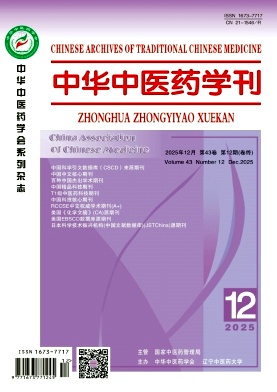
五味消毒饮结合皮肤再生医疗技术对慢性难愈合创面MMP-13/TIMP-1调控研究
摘要:目的 观察基质金属蛋白酶13(MMP-13)和组织金属蛋白酶抑制剂1(TIMP-1)在慢性难愈合创面中的作用,探讨皮肤再生医疗技术(MEBT)结合五味消毒饮的部分作用机制.方法 将90只雄性大鼠随机分为:湿润烧伤膏(美宝)(MEBO)+中药组、rb-FGF组、慢创组、急创组和空白组,每组各18只,建立创面模型,并于造模第3、7、14天采集标本组织,通过ELISA法检测标本组织匀浆中TNF-a和IL-6,以及Western-blot方法检测标本组织中MMP-13和TIMP-1的表达情况.结果 (1)MEBO+中药组创面愈合时间短于慢创组(P<0.05),且愈合率高于慢创组(P<0.05).(2)MEBO+中药组在造模第3天和第7天TNF-a表达高于慢...
皮肤再生医疗技术对大鼠慢性难愈合创面不同时段PTEN表达的影响
摘要:目的:观察皮肤再生医疗技术(Moist exposed burn therapy/Moist exposed burn ointment,MEBT/MEBO)对大鼠慢性难愈合创面组织中PTEN的动态调控作用,并探讨PTEN在慢性难愈合创面修复过程中的作用。方法:90只SD大鼠随机分为MEBO组、贝复济组、慢创组、对照组、空白组5组,每组18只,建立体表皮肤溃疡模型,并分别于造模后第3天,第7天,第14天取创面组织,采用Western blotting和Real-Time PCR技术检测PTEN蛋白以及基因表达水平。结果:除空白组外,其余各组大鼠创面组织中PTEN表达均随时间递增而变化,差异有统计学意义(P<0.01);除14 d的各组大鼠创面组织中PTEN表达差异无统计学意义外,其余各时间点组间的差异均有统计学意义(P<0.05)。结论:MEBT/MEBO能通过降低创面中PTEN蛋白和mRNA的表达水平,从而加速创面愈合。这可能是MEBT/MEBO促进慢性难愈合创面修复的机制之一。
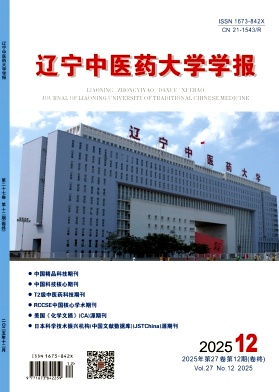
正安野木瓜丙酮粗提物水溶液治疗烧伤感染创面实验研究
摘要:目的:观察野木瓜丙酮粗提物水溶液对大鼠浅Ⅱ度烧伤感染创面的治疗作用。方法:取24只大鼠,在其背部建立浅Ⅱ度烧伤创面感染模型,随机分成生理盐水组、野木瓜组、美宝组。对大鼠进行皮肤刺激实验和治疗实验,通过检测创面面积变化、愈合率、脱痂率、完全脱痂时间,观察野木瓜丙酮粗提物水溶液(100 mg/mL)对烧伤感染创面的影响。结果:三组连续给药后,野木瓜组与生理盐水组、美宝组比较,创面红肿消退快、结痂快、渗出液少、完全脱痂时间短。结论:野木瓜丙酮粗提物水溶液(100 mg/mL)对大鼠烧伤感染有治疗作用。
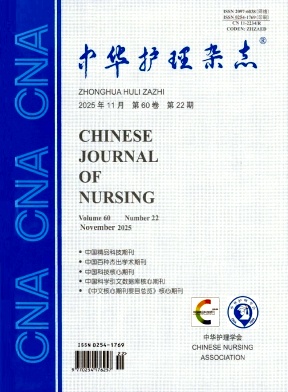
鼻咽癌放射治疗患者颈部皮肤护理干预效果比较
摘要:目的探讨新型软聚硅酮泡沫敷料、康复新液及美宝湿润烧伤膏对鼻咽癌患者颈部急性放射性皮炎的防护效果。方法选取84例入院接受放射治疗的鼻咽癌患者,随机分为A、B、C 3组,每组28例。放射治疗前2d起,A、B、C组患者颈部照射野皮肤分别开始使用新型软聚硅酮泡沫敷料、康复新液及美宝湿润烧伤膏。对放射治疗期间颈部皮肤放射性损伤进行为期6周的观察。采用压疮_褥疮_压力性溃疡测量方差分析进行统计学处理。结果 3组患者颈部皮肤急性放射性损伤的干预主效应差异有统计学意义(P<0.001),A组的皮肤放射性损伤最低,其次为B组和C组;3组颈部皮肤放射性损伤的时间主效应差异有统计学意义(P<0.001);时间与不同干预间存在交互作用(P<0.001)。结论采取局部预防性干预措施,可减轻鼻咽癌患者颈部皮肤急性放射性损伤。新型软聚硅酮泡沫敷料对鼻咽癌颈部放射性损伤的防护作用优于康复新液,康复新液优于美宝湿润烧伤膏。
International Top Papers
Global
A case of necrotizing fasciitis secondary to cutaneous tuberculosis in a patient with systemic lupus erythematosus (SLE)
Abstract:Introduction and importance: Skin tuberculosis is a rare chronic skin disease caused by Mycobacterium tuberculosis. Due to variations in host immunity, as well as differences in the toxicity, quantity, and routes of invasion of Mycobacterium tuberculosis, different clinical manifestations can occur. Case presentation: A 60-year-old female with a history of SLE for 16 years presented with dark brown nodules and plaques on the left lower limb and dorsal hands for approximately 8 months, which worsened with erythema and ulceration over the last 3 months. Prior to this, she was diagnosed with Mycobacterium tuberculosis infection. Her ulcer progressively increased in size and number, accompanied by yellowish-white cheesy discharge. Diagnostic evaluations, including a biopsy, confirmed the diagnosis of NF. Subsequently, the patient underwent treatment with a combination of surgical intervention, pharmacotherapy, and other supportive measures, leading to improvement and eventual discharge. Clinical discussion: Unlike the classical presentations, this case report describes a rare manifestation of NF secondary to cutaneous tuberculosis complicated by SLE. This presentation poses challenges in diagnosis and treatment, emphasizing the significance of comprehensive debridement and combination therapy in such patients. Further research is necessary to validate its effectiveness across broader patient demographics, especially in pediatrics and pregnant women. Conclusion: This case highlights the rare association between NF and cutaneous tuberculosis. The report of this case, with its rare clinical manifestations, can serve as a good reference to reduce misdiagnosis of cutaneous tuberculosis and provide timely and effective treatment for patients.
Comparison of changes in wound healing parameters following treatment with three topical wound care products using a laser wound model
Abstract:Purpose: This study intended to analyze the differences in the efficacy of three topical wound care products on wound healing in patients undergoing surgery under the laser wound model. Method: A total of 130 patients in the department of dermatology enrolled for retrospective analysis. These patients were divided into group A (n=43, Zihua Shaoshang Ruangao), group B (n=43, Shengji Yuhong Gao), and group C (n=44, Shirun Shaoshang Gao), respectively, according to the type of wound care product administrated. The efficacy was compared during one month of treatment. Results: There was little difference among groups A, B, and C in VAS score, FGF, EGF, and concentration of substance P (SP) at 1, 3, 5, 7, and 10 days after surgery (P>0.05), and a significant difference in these parameters among different time points was observed for intra-group comparison (P<0.05). There was no significant difference in the symptom scores at 1, 5, 10, 15, 20, 25, and 30 days after surgery among the three groups (P>0.05), while there was statistically significant difference at different time points in the same group (P<0.05). The wound healing rates at 10, 20, and 30 days after surgery were 25.58%, 65.12%, and 95.35% in group A, 20.93%, 67.44%, and 100.00% in group B and 25.00%, 59.09%, and 97.73% in group C respectively (P>0.05). The patients’ satisfaction rate towards the appearance was 95.35% in group A, 97.67% in group B, and 97.73% in group C (P>0.05). Conclusion: The three kinds of wound care products, namely Zihua Shaoshang Ruangao, Shengji Yuhong Gao and Shirun Shaoshang Gao, exhibited good efficacy on the wound care of patients after dermatologic surgery. The wounds could be improved quickly, and patients were highly satisfied with the new appearance of the wound. Clinically, wound care products can be selected according to the stock of products in the hospital and patients’ preferences.
Functional Testing of a Skin Topical Formulation In Vivo: Objective and Quantitative Evaluation in Human Skin Scarring Using a Double-Blind Volunteer Study with Sequential Punch Biopsies
Abstract:Objective: Many topicals claim an efficacious role in skin scar management with limited evidence. Our aim is to present a clear format for functional testing of a skin scarring ointment, using noninvasive and invasive measurements, categorizing findings under the physiological, structural, and mechanical parameters of a scar., Approach: A double-blinded, randomized volunteer research study of 45 subjects receiving an ointment composing of natural ingredients against a widely used antiscarring topical used as a positive control with temporal sequential punch biopsies (up to 16 weeks) was evaluated using noninvasive quantitative devices and validated by gene and protein studies., Results: Outcome measures included physiological, mechanical, and structural features of scars. Significant non-invasive findings included an increase in skin hydration (p?<?0.05) at week (W) 4, 8, and 12, and elasticity (W16; p?=?0.009). These findings were validated by immunohistochemistry (IHC) and quantitative real-time PCR (qRT-PCR). Hyaluronic acid IHC (W4 p?=?0.014, W12 p?=?0.034, and W16 p?=?0.042), qRT-PCR (W16 p?=?0.049); Collagen I (W16 p?=?0.034, and 0.049) IHC and qRT-PCR, respectively. Collagen III qRT-PCR (W12 p?=?0.035, and W16 p?=?0.32); elastin IHC (W12 p?=?0.044); and fibronectin IHC (W4 p?=?0.009, W12 p?=?0.038, and W16 p = 0.026)., Innovation: Utilizing this model allows for quantitative, objective evaluation of any topical, where previously there has been a paucity of relevant methods to evaluate their effect., Conclusions: The positive effect of a topical formulation with an unknown mechanism of action on early cutaneous scar maturation over progressive sequential time points is now evidenced using noninvasive and invasive techniques with the findings categorized on the basis of scarring parameters.
Improving scar quality: a prospective clinical study
Abstract:Following traumatic or surgical injury to the skin, wounds do not heal by tissue regeneration but rather by scar formation. Though healing is definitely a welcomed event, the resultant scar, very often, is not aesthetically pleasing, and not infrequently, may be pathologic causing serious deformities and contractures. Management of problematic scars continues to be a frustrating endeavor with less than optimal results. Prophylactic methods of wound management to minimize serious scarring are being developed. In a previously published study, we have demonstrated improved healing of split thickness skin graft donor sites following treatment with Moist Exposed Burn Ointment (MEBO, Julphar Gulf Pharmaceutical Industries, Ras Al-Khaimah, UAE). At present, we are reporting the results of a comparative clinical prospective study evaluating scar quality following primary healing of elective surgical and traumatic facial wounds with prophylactic MEBO application, topical antibiotic ointment application, and no topical therapy at all. Scars were evaluated according to the Visual Analogue Scale for scar assessment. Statistical analysis of scar assessment scores demonstrated marked prevention of unfavorable scars with improved cosmetic results following MEBO prophylactic therapy.
学术风向标 / Research Trends
热门下载排行 Top 5
热搜关键词 Top 5
研究热词
权威图书 / Authoritative Books
查看更多